

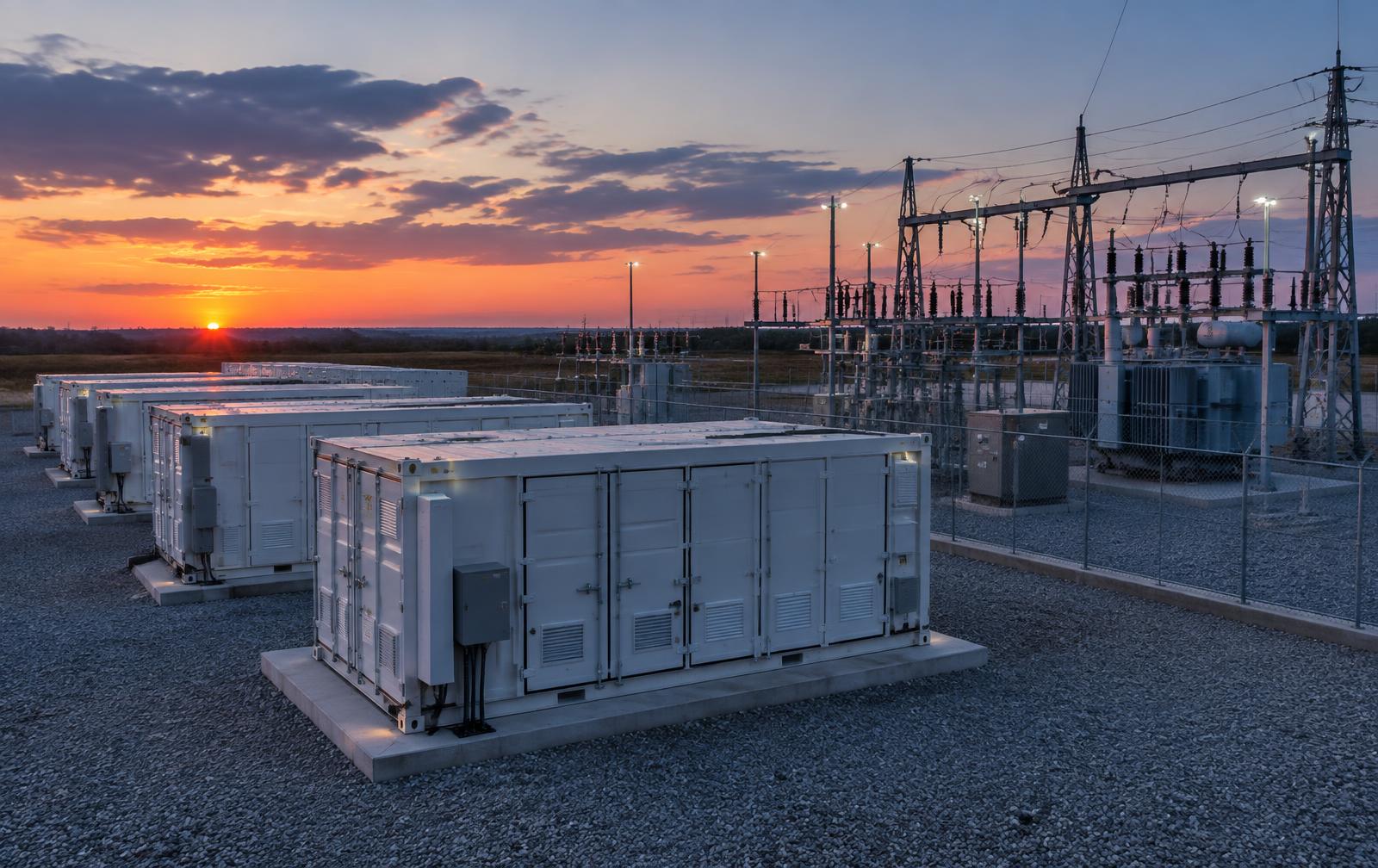
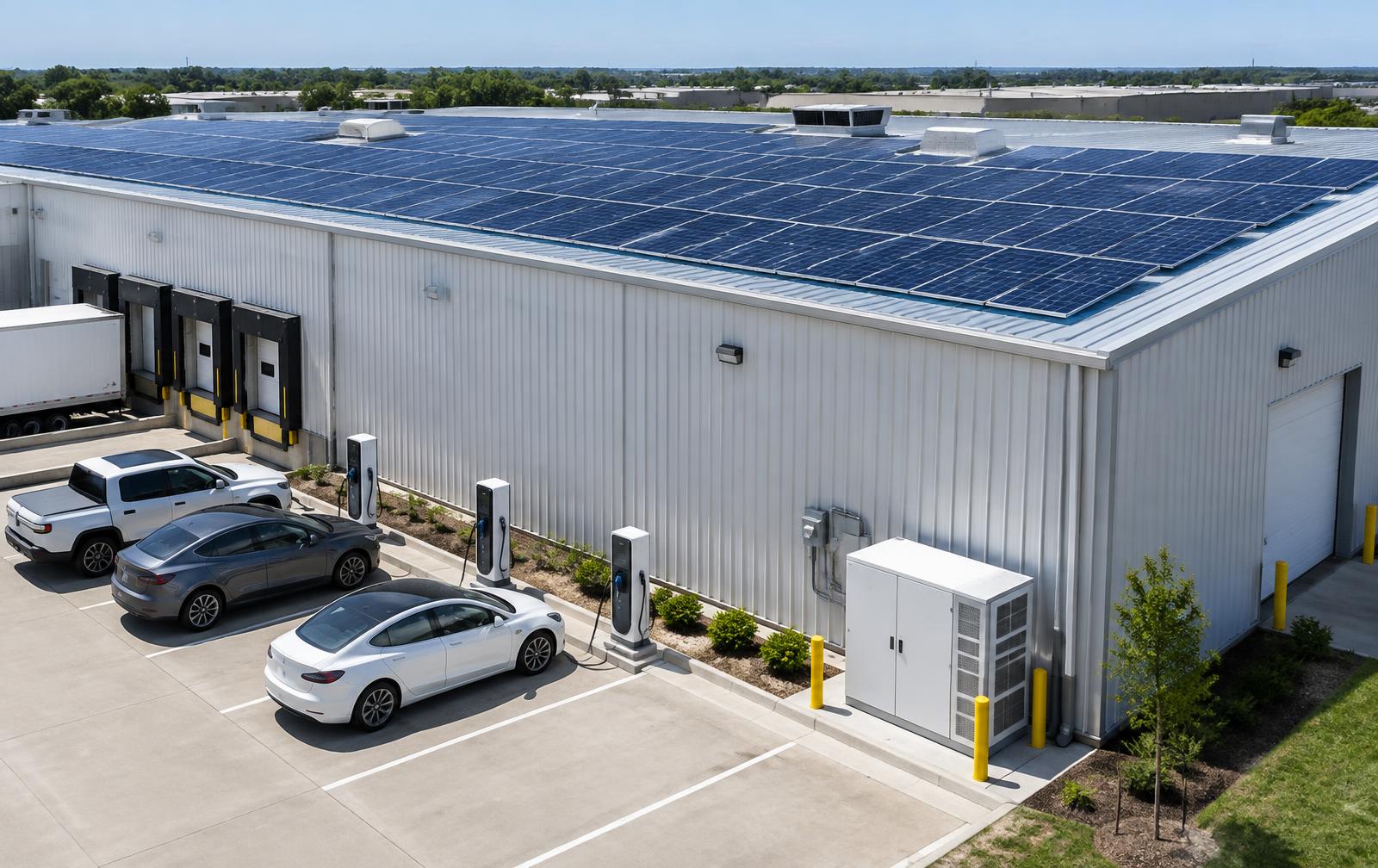

Your portfolio is generating. The question is whether you’re in control of it.
When a negative-price signal arrives, the curtailment decision has to fire in seconds, at the asset, not after a cloud round-trip. Sunrock moved that decision to the edge across 150 farms.
Proven across renewable portfolios operating at national scale.
- Sunrock150 solar farms under edge curtailment control
- HVCintegration cut from four months to one week
- Netbeheer Nederlandgrid operator collaboration
- DSG Energy Serviceshybrid portfolio on one data model
At a glance
Helin connects renewable energy assets to real-time control at the edge.
- Curtailment fires at the asset, no cloud round-trip, no missed windows
- Sites keep running when connectivity drops, on local EMS with an 8-hour data buffer
- Any OEM, any asset type: solar, wind, BESS, EV charging, PtX, one data model across the full portfolio
- RTI-certified for the Dutch grid operator mandate: power reduction begins within 10 seconds of a signal
- NIS2 and DORA audit trail generated automatically, no manual assembly before an audit
Where revenue leaks in a renewable portfolio
- By the time the curtailment fires, the window is gone
- When a negative-price signal arrives, most control platforms route it to the cloud and back before acting. That round-trip takes long enough to miss the trade. Germany recorded 573 negative-price hours in 2025, up from 457 in 2024. Each one is a direct financial loss for any asset that kept producing.
- A site that loses connectivity loses control
- Most monitoring platforms have no local fallback. When a site goes offline, the asset runs on its last known state until someone notices. For BESS assets providing frequency response, that gap is measured in seconds, not minutes.
- Portfolio visibility is assembled, not real
- A portfolio built through M&A or multiple EPCs runs three to five separate OEM platforms, each sampling at different rates, exposing different tags, delivered into different interfaces. The asset manager puts together a fleet view from four dashboards and an Excel file. By the time it's done, some of it is already stale.
- NIS2 and DORA compliance happens the night before the audit
- Most operators can't produce a 24-hour incident notification from their current systems without a manual data collection exercise across sites and vendors. The evidence exists. It just isn't assembled in a form that satisfies the requirement.
Annual revenue exposure
Three inputs. One output. No form gate.
Reference: Netherlands 458 (2024) · Germany 573 (2025)
Balancing-market rate: $1.772/MW/month
Annual revenue exposure
$23.178 – $72.822
Illustrative range on conservative assumptions. Formula: portfolio MW × negative-price hours × ($564/MW/month × 12 ÷ 8,760), with the upper bound at the balancing-market rate. All outputs are illustrative projections, not a forecast of your results.
What the platform runs across a renewable energy portfolio
What runs under the portfolio
Key features by capability
- Edge control01
Edge curtailment and dispatch
Curtailment logic executes at the asset — day-ahead scheduled, real-time, and ramp-rate — with no cloud round-trip.
- Edge control02
Local EMS
On-site control balances PV, wind, BESS, and loads. Continues on last-set parameters during connectivity loss. 8-hour local data buffer.
- Edge control03
RTI compliance
Certified Dutch RTI mandate. Power reduction begins within 10 seconds of a grid operator signal. Named by Netbeheer Nederland as an approved provider.
- Edge control04
Zero-touch provisioning
Edge box installed on-site. Platform auto-provisions, pushes the application, site is live in minutes. No specialist IT on-site.
One platform. No integration debt.
Most renewable operators are running five vendors with no single owner. Helin replaces that stack. One runtime at the asset, one support line, one vendor accountable for the result.
Edge control
Critical control decisions happen at the asset, not in a data centre. No cloud round-trip on time-critical trades, no missed curtailment windows. The Dutch RTI mandate requires this architecture. Helin meets it by design, not by retrofit.
Security in the runtime
Certificate-based device identity and zero-trust access governance are in the runtime. Every device authenticated. Every access event logged. NIS2 and DORA audit readiness is a structural property of the platform, not a project before every audit.
Any portfolio, any hardware
Multi-OEM, multi-asset-type, built through M&A or organic growth. Helin connects what's already installed. No hardware standardisation programme required. A legacy turbine and a new BESS unit in the same operational view, at the same data resolution.
Your applications, at the edge
The same runtime that powers Smart Grid Manager is available for any application an operator needs to deploy at the asset. Internal expertise runs at the edge without rebuilding the infrastructure layer each time.
150 solar farms.Curtailment at the asset.See what that looks like at your scale.
Success stories
150 solar farms. Curtailment decided at the asset.

After deployment across 150 sites
- 150
- Solar farms under edge control
- ~1 GWp
- Operational rooftop solar
- 20%
- Revenue increase
Sunrock owns and operates nearly 1 GWp of solar and storage assets across Western Europe. Before Helin, the portfolio had no real-time visibility or control. Grid congestion signals arrived too late. Trading penalties accumulated.
“I think actually 1.5 years ago, our solar farms were stupid, so to say. We weren't able to steer them and to get real-time data from those farms.”
“Having Helin's Smart Grid Manager as our one central platform is a great benefit for our asset portfolio. I can highly recommend industry peers to have a similar setup.”
Architecture comparison
| Single-vendor edge platform (Helin) | Point-solution stack | Cloud-first SCADA | |
|---|---|---|---|
| Who owns the result | One vendor, one support contact | Three to five vendors; integration sits with whoever built it | SCADA vendor owns monitoring; control is a separate project |
| Curtailment latency | Edge execution; no cloud round-trip | Varies by integration quality; often 5 to 30 seconds | Round-trip adds latency; can't guarantee RTI mandate compliance |
| Connectivity loss | Local EMS continues on last-set parameters; 8-hour data buffer | Depends on individual components | Site typically loses visibility and control |
| NIS2 / DORA | Automated audit trail; compliance report generated from log | Manual; assembled across vendors | Varies; typically a separate compliance tool |
| Multi-OEM support | Any hardware, any protocol | Varies by vendor | Often tied to preferred OEM list |
| VPP / trading integration | Standardised API; asset-specific access grants; ready on day one | Custom per trading partner | Typically not in scope |
| Who answers at 2am | Helin | The integrator, if still under contract | SCADA vendor, then integrator, then asset OEM |
| Time to first site live | Days (zero-touch provisioning) | Weeks to months | Months |
Specifications
| Supported asset types | Solar PV, wind (including legacy), BESS, EV charging, heat pumps, industrial loads, PtX, grid assets |
|---|---|
| Protocol support | OPC UA, Modbus TCP/RTU, MQTT, SunSpec, IEC 61850 (incl. 7-420), CAN bus, NMEA, Profibus, BACnet, DNP3 |
| Data resolution | Sub-second telemetry; 4-second trading-market resolution (Sunrock) |
| Curtailment types | Day-ahead scheduled, real-time, ramp-rate, flex/baseline, load balancing, peak shaving |
| RTI | Dutch RTI mandate; IEC 61850-7-420; EU RfG Regulation (EU) 2016/631; power reduction begins within 10 seconds |
| Local EMS | Continues operating during connectivity loss; 8-hour local data buffer |
| Cybersecurity | Zero-trust; X.509 / TPM 2.0 / TLS device identity; NIS2, DORA, EU Cyber Resilience Act |
| OTA updates | Application and OS updates pushed over-the-air through the platform |
| Provisioning | Zero-touch; auto-provisioning on hardware install; no specialist IT on-site |
| API | REST API for trading systems, VPP aggregators, EMS, grid operators; Helin Universal Data Model (SunSpec-based) |
| Access governance | Asset-specific grants; fully logged; revocable at any time without disrupting other parties |
Frequently asked questions
What this is not
A monitoring-only platform
Dashboards are included. Control is the reason operators deploy it: curtailment, dispatch, local EMS, and RTI compliance all execute at the asset.
A cloud-dependent system
Control logic runs at the edge. The cloud handles data aggregation and reporting. Connectivity loss doesn't stop a site.
A SCADA replacement
Helin connects to existing SCADA where present and adds the control, governance, and compliance layer above it.
A rip-and-replace
No hardware standardisation programme required. Helin connects to what's already installed.
A VPP aggregator
Helin exposes standardised API access to VPP platforms. It's not itself a flexibility trading or aggregation platform.
Self-service on day one
Deployment takes days for a standard site. Integrations with complex legacy SCADA configurations take longer. Confirm scope before committing a go-live date.
Built for large-scale manufacturing
Helin is built for distributed renewable energy assets, offshore operations, and maritime. Manufacturing is not a current deployment vertical.
A substitute for legal NIS2 review
Helin provides the technical controls NIS2 requires. Interpretation of specific obligations under your jurisdiction should be confirmed with legal counsel.
Edge intelligence, once a month.
Field notes from industrial operations running control at the asset: deployment patterns, compliance changes, and what we learn on site. No product marketing.