
Your fleet runs on control decisions. Most of them are made too late.
Data sits in vessel historians. Insights live in dashboards. By the time it reaches the person who needs to act, the window is already gone. Helin connects operational data to real-time control decisions at the edge, across 500+ vessels and floating equipment, without cloud dependency and without adding integration complexity.
Trusted by operators running mission-critical fleets worldwide.
- Boskalis
- Noble
- bp
- Valaris
- IQIP
At a glance
- Real-time control at the asset level. No cloud hop on critical decisions
- Any OEM, any protocol, any vessel connected to one architecture
- Boskalis connected 500+ vessels. A real-time compliance dashboard helped support a high value tender
- Zero-trust security and device identity built into the runtime
- IMO Cyber Risk Management, NIS2, and CII compliance built in by design
- Runs on existing edge hardware. No rip-and-replace
Where fleet control breaks down
- Control decisions wait for data that arrives too late
- Your vessel generates operational data continuously. By the time it reaches shore it has been aggregated, delayed by satellite latency, and stripped of the timing that makes it useful. The curtailment window, the rerouting call, the safety intervention. All of them already closed.
- Data sits in silos across OEMs, vessels, and regions
- Your SCADA historian, fuel sensors, safety cameras, and thruster monitoring systems were bought separately, from separate vendors, in separate formats. Your IT team spends more time extracting and reconciling than acting. When something goes wrong off the coast of Malaysia, the people who need to know find out last.
- Fleet-wide compliance reporting is a manual exercise
- IMO CII. NIS2. CSRD. Regulators want structured, auditable data across your entire fleet. What most operators have is spreadsheets, email chains, and a port-call export nobody fully trusts. Tender submissions take weeks because there is no live view of the whole fleet.
- Every new application means a new integration project
- You want fuel monitoring. Predictive maintenance. Automated safety reporting. Each one means a systems integrator, a new data pipeline, months of delivery. The vendor who sold you the application does not own the integration. You do.
- Remote access to vessel systems is ungoverned
- Who has access to your vessels' control systems right now? Most fleet operators cannot answer that. Remote access is patched across multiple tools, OT access often has no audit trail, device identities are unmanaged. That is a cybersecurity liability and an IMO requirement many fleets are not meeting.
How much of your fleet are you running blind?
Blind vessels = fleet total minus vessels sending live data. Unmeasured spend = blind vessels × annual fuel spend per vessel.
Where the control gap shows up most
What makes control possible at fleet scale
Key features by capability
- Edge control01
Edge runtime
Applications execute on the vessel. Control logic, AI inference, and data processing run locally. If the satellite goes down, operations continue. Nothing waits for a cloud response before acting.
- Edge control02
Hardware-agnostic deployment
Runs on hardware already installed on your vessels. No fleet-wide standardization project required before you can start. New vessels join without a hardware replacement.
- Edge control03
Edge buffering
When a satellite link drops, data queues locally and transmits when the connection returns. The gap in the operational record closes automatically. Nothing needs to be manually recovered.
- Edge control04
Bandwidth management
A delta filter only transmits sensor readings past a configurable change threshold. Low-change data stays on the vessel. Relevant for any fleet where satellite bandwidth is charged by the megabyte.
- Edge control05
OTA fleet management
Push OS and application updates to hundreds of vessels at once. No engineer required on-site. Staged rollouts across test, pilot, and production mean a bad update does not reach the whole fleet simultaneously.
Proof — Boskalis
500+ vessels, no two alike, one platform since 2022
- Vessels & floating assets
- 500+
- Businesses connected
- 5
- Partnership started
- 2022
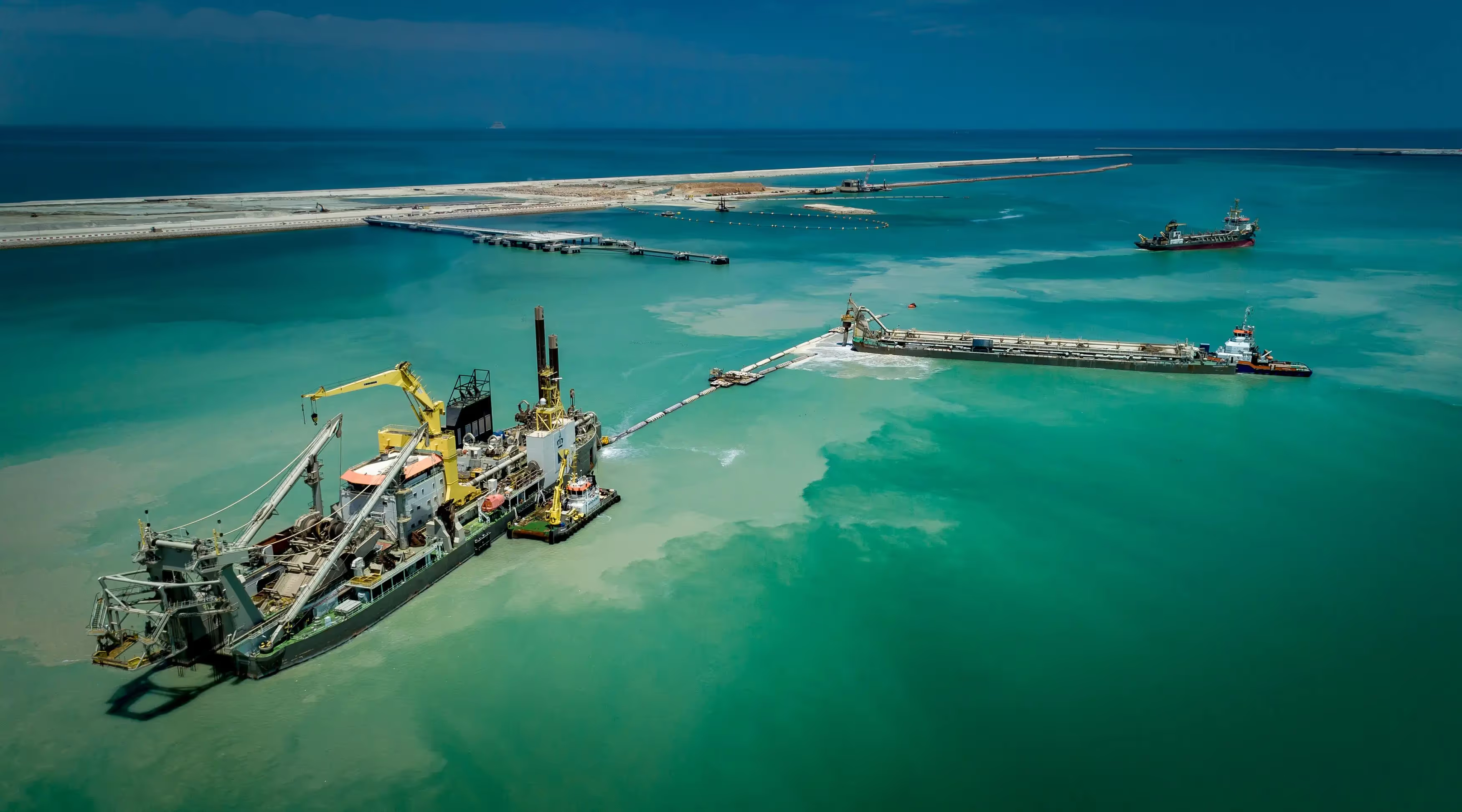
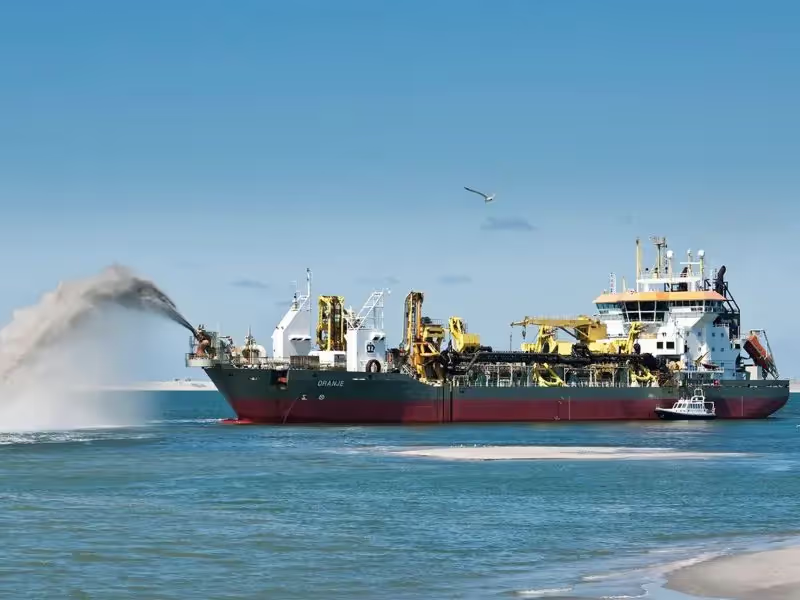
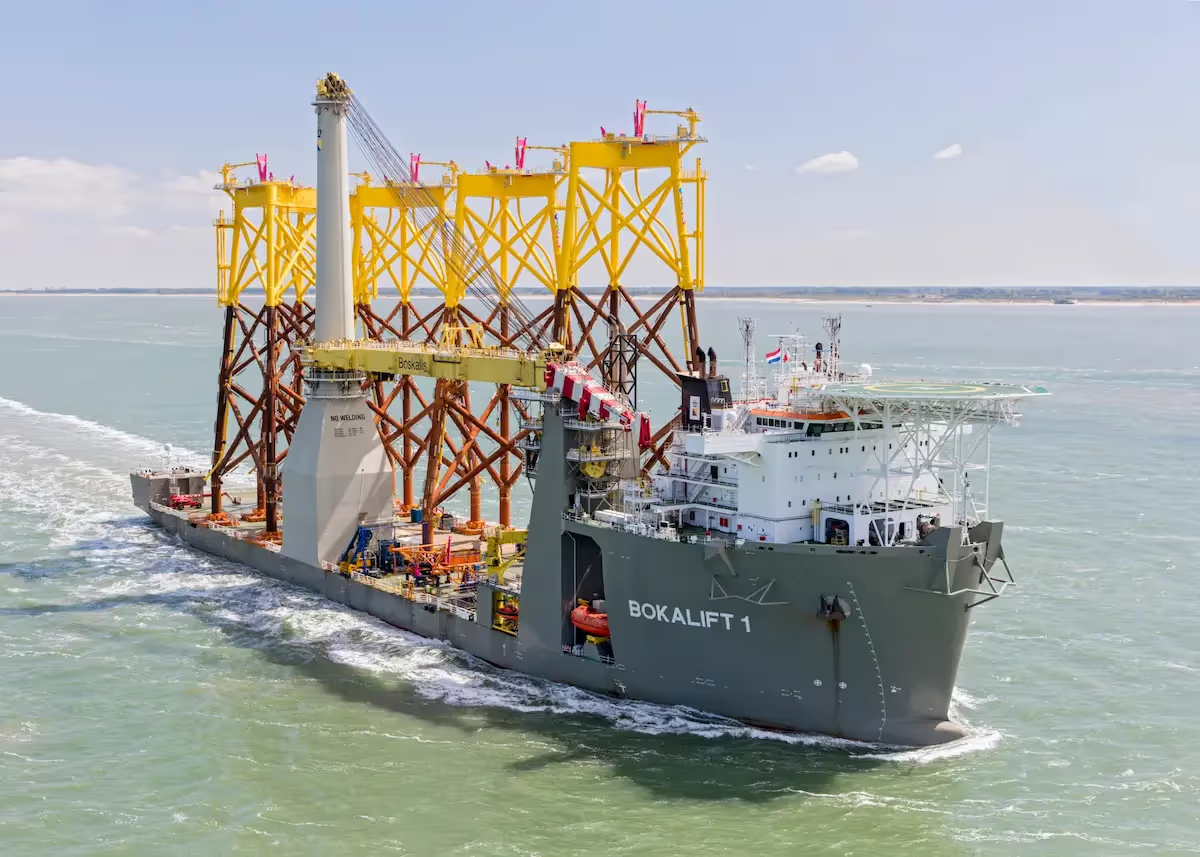
Boskalis does dredging, heavy transport, offshore installation, towage and salvage. Five businesses, more than 500 vessels and floating assets, 11,000 people, and effectively no two hulls configured the same way. Legacy IT couldn't consolidate it. Building the middleware in-house was assessed and rejected as too expensive and too slow.
Helin Platform runs inside Boskalis's own Azure tenant. It ingests from any protocol on board and carries applications back out to the fleet: a dredging data parser, fuel monitoring on OPC UA, gas detection, regional dashboards. A live compliance dashboard across 100+ vessels supports tender documentation.
Four years in, the gains they report are the ones nobody puts in a brochure. IT team hours. Safety. Fuel, through better routing. Emissions, as a consequence of the fuel.
The number that matters for anyone reading this page is the last one. Five hundred vessels, one architecture, and no project per ship.
One architecture, from vessel to fleet
Any vessel. Any OEM.
Operational data from onboard systems and sensors.
Helin at the edge
Local processing and applications running on the vessel.
Boskalis’s own Azure tenant
Fleet data, regional dashboards and compliance reporting.
Your fleet is already generating the data.
Most customers start with two to five vessels. Same architecture scales to the full fleet. No re-integration needed.
Why operators stop assembling it themselves
Most maritime operators evaluating this end up with six vendors: device management, tunneling and remote access, a security tool, a data pipeline product, container orchestration, and a systems integrator holding it together on time-and-materials. No single vendor owns the full stack. Integration risk passes back to the buyer. When something breaks, every vendor points at the next one.
| Capability | Helin | Six-vendor stack | Build it yourself |
|---|---|---|---|
| Who owns integration risk | Helin | You | You |
| Time to first vessel connected | Weeks | 3 to 6 months | 6 to 18 months |
| Control logic runs at the asset | Always | Rarely | Depends |
| Security / device identity | Built into runtime | Separate tool | Custom build |
| OTA fleet updates | Built in | Separate tool | Custom build |
| Add a new application | Deploys on existing infrastructure | New integration | New integration |
| Compliance documentation | Structured and auditable | Manual, partial | Manual |
| Scale to 100+ vessels | Same architecture | Renegotiate contracts | Re-architect |
Specifications
| Protocols | OPC UA, Modbus, MQTT, CAN bus, NMEA, REST API, Siemens S7, SQL |
|---|---|
| Deployment | Edge node + cloud hybrid. On-premises/private cloud for data-residency requirements. API-first for third-party embedding. |
| Edge OS | Ubuntu 20.04 / 22.04 |
| Cloud destinations | Azure Data Explorer, Kafka, TimescaleDB/TigerData, cold storage |
| Security | Zero-trust, PKI/X.509, TPM 2.0, TLS, Purdue model network segmentation, MFA-gated remote access |
| Compliance frameworks | IMO Cyber Risk Management (mandatory since 2021), EU NIS2, EU CSRD / IMO CII |
| Remote access | SSH, HTTPS, GUI tunnels, MFA, full audit trail. No VPN required. |
| Hardware | Hardware-agnostic. Runs on existing edge hardware. |
| Scale | 400 to 500+ mission-critical sites and vessels in production. Volume licensing discounts from 25 nodes. |
Frequently asked questions
What this is not
Helin is not a shipping ERP.
Crew scheduling, port logistics, cargo documentation, and voyage planning are outside its scope.
Helin is not a replacement for your SCADA or control system.
It connects to them and makes their data usable across the fleet.
Helin is not a cybersecurity monitoring service.
It provides the architecture, device identity, and access governance your security team audits against. SOC integration is available; Helin does not replace a security operations function.
Helin is not a reporting tool.
Real-time data and structured outputs feed your reporting systems. The reporting itself is yours.
Helin is not a fit for single-vessel operators or low-complexity fleets.
The architecture is built for distributed, mission-critical operations with heterogeneous OEM environments and real compliance obligations. If that is not your situation, we will say so before starting a pilot.
Edge intelligence, once a month.
Field notes from industrial operations running control at the asset: deployment patterns, compliance changes, and what we learn on site. No product marketing.